

Pakistan Strengthens Middle East Diplomacy as Saudi Arabia Announces $3 Billion Support
Pakistan boosts diplomacy with Saudi Arabia, Iran, Qatar, and Turkiye while securing $3 billion financial support to stabilize economy and reserves.
Ayesha
4/16/20262 min read
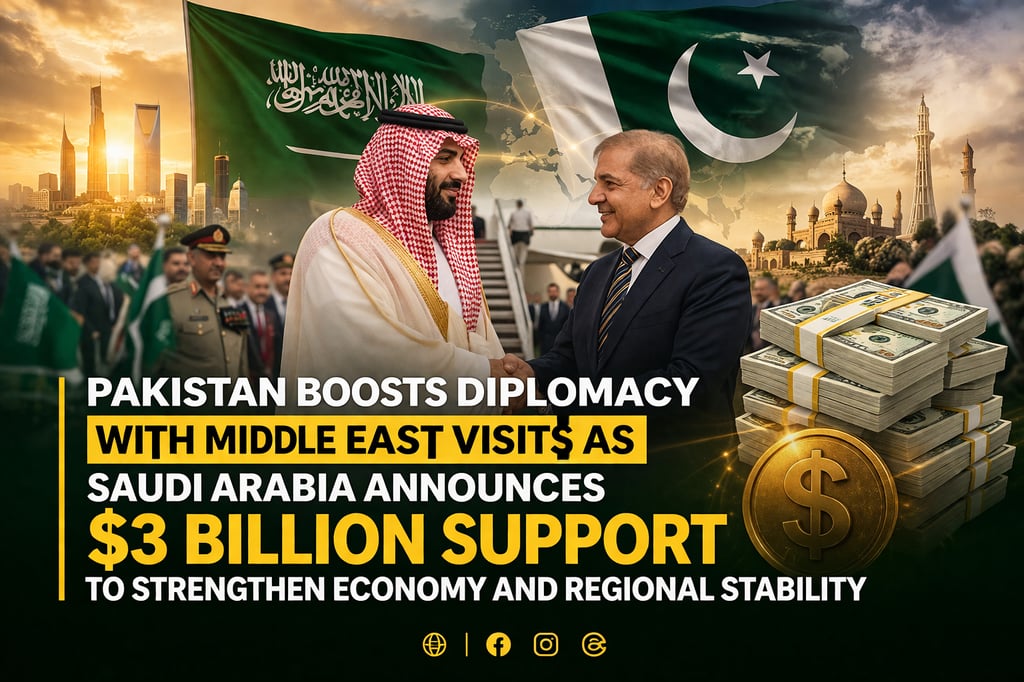
Pakistan Expands Diplomatic Outreach Amid Middle East Tensions and Secures Financial Support
ISLAMABAD – Pakistan has intensified its diplomatic efforts in the Middle East, with Prime Minister Shehbaz Sharif and Army Chief Field Marshal Syed Asim Munir undertaking key foreign visits aimed at reducing regional tensions and promoting long-term peace.
Prime Minister Shehbaz Sharif arrived in Saudi Arabia as part of a broader multi-country tour. Upon arrival, he was received by senior Saudi officials, including Prince Saud bin Mashaal and ambassadors from both countries. During his stay in Jeddah, the premier held important talks with Saudi Crown Prince Mohammed bin Salman, focusing on strengthening bilateral ties and discussing the evolving regional situation.
The prime minister is also scheduled to visit Qatar and Turkiye, where he will engage with top leadership on cooperation, security, and diplomatic coordination. In Turkiye, he is expected to participate in the Antalya Diplomacy Forum, presenting Pakistan’s stance on global and regional issues while holding meetings with international leaders, including President Recep Tayyip Erdogan.
At the same time, Pakistan’s military leadership is also actively engaged in diplomacy. Field Marshal Asim Munir, along with Interior Minister Mohsin Naqvi, visited Tehran, where they were warmly welcomed by Iranian officials. The visit reflects Pakistan’s balanced approach to fostering ties with key regional players.
In a major economic development, Saudi Arabia has pledged an additional $3 billion deposit to Pakistan. This financial support will help Islamabad strengthen its foreign exchange reserves and repay a $2.5 billion loan owed to the UAE. Officials say the funds are expected to be received soon.
Finance Minister Muhammad Aurangzeb, speaking from Washington during IMF and World Bank meetings, confirmed the Saudi commitment and highlighted its importance in stabilizing Pakistan’s economy. He noted that the support would provide much-needed confidence to markets and help maintain external financial stability.
The government aims to increase foreign reserves to around $18 billion by the end of the fiscal year, ensuring sufficient import coverage and meeting international financial obligations. Pakistan has already demonstrated its commitment by successfully repaying a $1.4 billion Eurobond.
Officials also emphasized ongoing reforms, including privatization, improved financial management, and digital transformation to enhance transparency and efficiency. Pakistan is also working to diversify its funding sources through initiatives like global bond programs.
Meanwhile, diplomatic engagement continues on multiple fronts. Iran’s ambassador in Islamabad met with JUI-F chief Fazlur Rehman to discuss bilateral relations and regional peace. Both sides appreciated Pakistan’s role in facilitating dialogue and promoting stability in the region.
Overall, Pakistan’s recent diplomatic moves, combined with timely financial support from Saudi Arabia, are being seen as a positive step toward economic recovery and stronger global engagement.
Our audience means everything to us.
Have feedback or suggestions to make us better? We’re always listening—feel free to get in touch with us at ayesha@truthorahub.com