

Illegal Constructions Surge in Karachi as SBCA Faces Scrutiny Over ‘Portion Mafia’ and Weak Enforcement
Illegal construction in Karachi continues to rise as SBCA struggles with enforcement, residents face threats, and anti-corruption probes target officials.
Ayesha
4/20/20264 min read
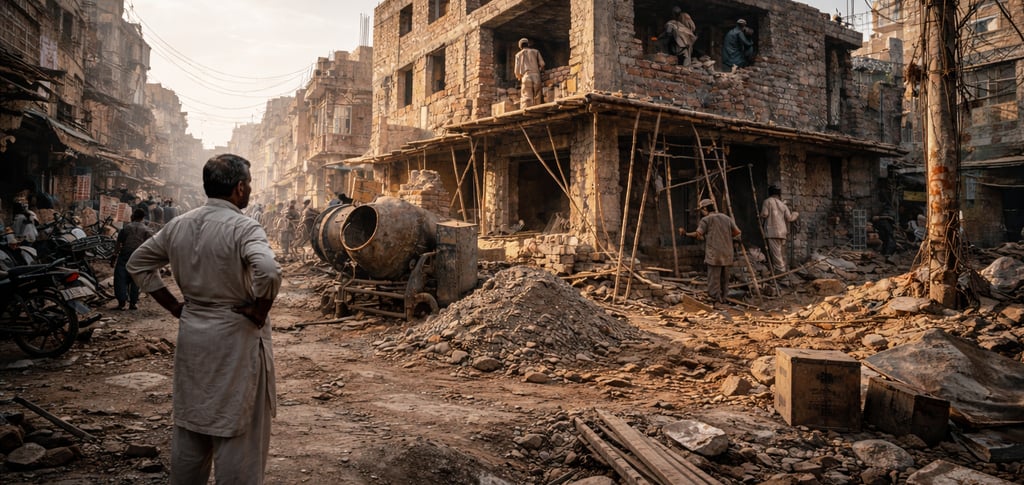
Illegal Construction Crisis in Karachi Deepens Amid SBCA Scrutiny and Rising Public Concerns
KARACHI – Despite repeated claims of strict enforcement and regulatory crackdowns, illegal construction across Karachi continues to grow at an alarming pace. The issue has once again come into sharp focus following mounting complaints from residents, increasing pressure on civic infrastructure, and fresh investigations into officials of the Sindh Building Control Authority (SBCA).
Even after tragic incidents like the Gul Plaza collapse, which highlighted the dangers of unregulated construction, the situation on the ground appears largely unchanged. Across multiple neighborhoods, unauthorized buildings are not only being constructed openly but, in many cases, previously demolished structures are being rebuilt without hesitation.
Rise of the ‘Portion Mafia’ in Residential Areas
A key driver behind this growing problem is what locals commonly refer to as the “portion mafia.” This organized network typically acquires residential plots and constructs additional floors far beyond what is legally permitted.
In areas where only one or two storeys are approved, builders are reportedly adding three to four floors, drastically increasing the number of occupants per plot. This practice not only violates building regulations but also places severe strain on already fragile urban infrastructure.
Water supply, sewerage systems, electricity distribution, and road capacity are all being pushed beyond their limits. Residents say that what were once peaceful residential neighborhoods are now turning into overcrowded zones with worsening living conditions.
North Nazimabad: A Case Study of Growing Violations
North Nazimabad has emerged as one of the most prominent examples of this issue. Once considered a well-planned and relatively orderly residential area, it is now witnessing a surge in illegal construction activity.
Residents in several blocks have raised serious concerns, claiming that unauthorised buildings are being constructed openly, often with little to no fear of enforcement. Many say their quality of life has deteriorated due to increased congestion, noise, and pressure on utilities.
What is even more troubling, according to locals, is that action taken against illegal structures often appears temporary or symbolic. Buildings that are partially demolished are sometimes rebuilt within a short period, raising questions about the effectiveness of enforcement mechanisms.
Residents Face Threats for Speaking Out
Perhaps the most alarming aspect of the situation is the reported intimidation faced by residents who attempt to challenge illegal construction.
In one instance, a resident from Block I of North Nazimabad claimed that he faced threats after opposing an unlawful building project next to his home. According to his account, a multi-storey structure was being constructed on a plot where such development was not permitted.
After approaching authorities, he managed to secure a demolition order. The structure was partially torn down by officials, but construction resumed shortly afterward.
When he raised objections again, he alleged that he was threatened and even discouraged by local authorities from pursuing the matter further. Such incidents have created an atmosphere of fear, discouraging others from speaking out against illegal practices.
Problem Spreads Across Multiple Areas
The issue is not limited to North Nazimabad. Similar complaints have been reported from various parts of Karachi, including:
Federal B Area
Liaquatabad
PECHS
Jamshed Town
Nazimabad
Lyari
Old city areas
In each of these localities, residents report a similar pattern: illegal construction, weak enforcement, and growing pressure on infrastructure.
Town Authorities Claim Limited Power
Town Municipal Corporations (TMCs), which are often the first point of contact for residents, say they are largely unable to act due to limited authority.
Local officials acknowledge that illegal construction is a serious issue but maintain that enforcement falls outside their jurisdiction. This lack of coordination between different authorities has further complicated the situation.
According to local leadership, even when complaints are received, there is little they can do beyond forwarding them to relevant departments. This has led to frustration among residents, who feel that no single authority is taking responsibility.
Infrastructure Under Severe Pressure
One of the most visible consequences of illegal construction is the strain on urban infrastructure.
A plot originally designed for a small family is now being used to house multiple families. This exponential increase in population density results in:
Overloaded sewerage systems
Water shortages
Frequent power issues
Increased traffic congestion
Reduced public safety
Urban planners warn that if the trend continues, it could lead to long-term damage to the city’s infrastructure, making it even harder to manage in the future.
SBCA’s Enforcement Claims
In response to criticism, the SBCA has stated that it is actively taking action against illegal construction.
According to official data, the authority carried out 396 enforcement actions between January and April across Karachi. These actions included demolitions, sealing of premises, and halting of construction activities.
Breakdown of actions by district includes:
District East: 136
District Central: 133
District South: 52
Korangi: 27
Malir: 23
West: 17
Keamari: 5
Industrial zone: 3
The authority claims that it is no longer limited to issuing notices and is instead taking direct action on the ground.
However, critics argue that these measures are insufficient, pointing to the continued rise in illegal construction as evidence of weak enforcement.
Anti-Corruption Inquiries Add Pressure
The situation has become even more complex with the involvement of the Sindh Anti-Corruption Establishment (ACE), which has launched multiple inquiries into SBCA officials.
These investigations are based on various complaints, including:
Approval of illegal building plans
Failure to enforce regulations
Alleged irregular appointments within the department
Officials across different ranks, from mid-level officers to senior positions, are reportedly under scrutiny. They have been asked to provide records related to building approvals and other administrative decisions.
In some cases, inquiries are also examining whether individuals were appointed without meeting required qualifications.
Governance Challenges and Lack of Accountability
The ongoing crisis highlights deeper governance issues within Karachi’s urban management system.
Experts believe that the problem is not just about illegal construction but also about:
Weak regulatory frameworks
Lack of coordination between departments
Limited accountability
Influence of organised networks
Without addressing these underlying challenges, enforcement efforts are unlikely to produce lasting results.
Public Trust at Stake
For many residents, the situation has eroded trust in public institutions. When illegal constructions continue despite complaints and even after official action, it raises serious questions about transparency and accountability.
The fear of retaliation further discourages citizens from reporting violations, allowing the problem to persist unchecked.
The Way Forward
Addressing Karachi’s illegal construction crisis will require a comprehensive and coordinated approach. Key steps may include:
Strengthening enforcement mechanisms
Improving coordination between authorities
Ensuring transparency in building approvals
Protecting whistleblowers and residents
Taking strict action against corrupt practices
Urban experts also stress the importance of long-term planning to accommodate the city’s growing population without compromising safety and infrastructure.
Conclusion
Karachi’s illegal construction problem is no longer an isolated issue—it has evolved into a full-scale urban crisis. With residents facing threats, infrastructure under pressure, and authorities under scrutiny, the need for decisive action has never been greater.
While official claims of enforcement continue, the reality on the ground suggests that much more needs to be done to restore order, ensure safety, and rebuild public trust in the system.
Our audience means everything to us.
Have feedback or suggestions to make us better? We’re always listening—feel free to get in touch with us at ayesha@truthorahub.com