

Big Change for Car Buyers: Pakistan Plans Major Cut in Import Duties Under New Auto Policy
Under Pakistan’s new Auto Policy 2026, import duties on vehicles are set to decrease, which is expected to lower prices and offer more options to buyers.
Ayesha
4/22/20262 min read
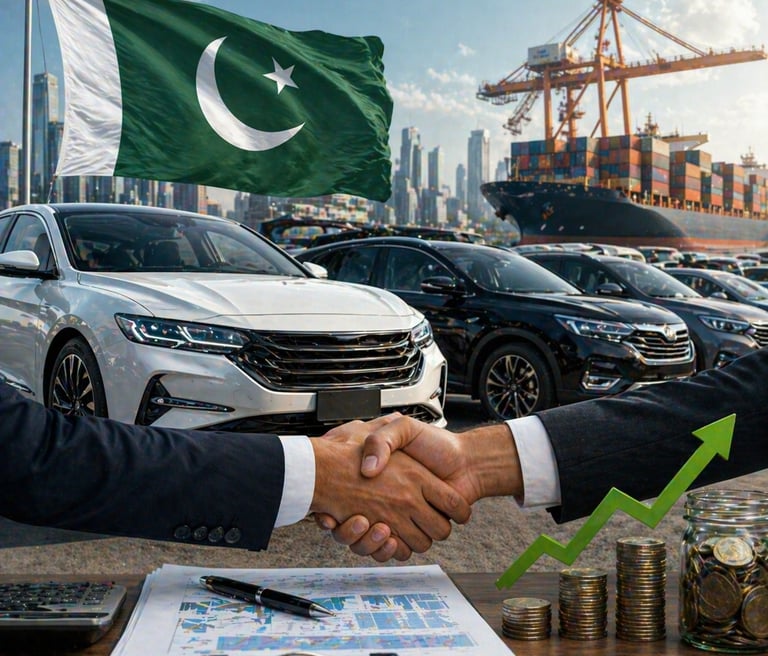
Pakistan Moves Toward Cheaper Cars with New Auto Policy
Pakistan is preparing to roll out a major auto sector policy that could significantly impact car prices and availability in the coming years. Under an agreement with the International Monetary Fund (IMF), the government plans to gradually reduce import tariffs on vehicles, aiming to make cars more affordable for consumers.
According to officials, the weighted average tariff on vehicle imports will decrease from 10.6% to 7.4% by 2030, marking a notable shift toward a more open and competitive auto market.
Immediate Relief Expected in Budget 2026
The upcoming Budget 2026-27, expected in early June, may bring the first round of relief. Sources indicate that tariffs could drop from 10.6% to around 9.5%, setting the stage for further reductions in the years ahead.
This move is part of Pakistan’s commitments under the $7 billion IMF Extended Fund Facility (EFF), which also includes a key decision:
👉 No new Regulatory Duty (RD) will be imposed on vehicle imports
What the New Auto Policy Will Change
The upcoming policy, expected to be implemented from July 1, 2026, is designed to reshape Pakistan’s auto industry.
Key highlights include:
🚗 Gradual reduction in import duties over 5 years
📉 Tariffs expected to fall below 6% by 2030
🏭 Focus on boosting local manufacturing and parts localization
💰 Goal to reduce vehicle prices for consumers
New Tariff System Coming
The current duty structure is set to be replaced with a simplified system:
0%
5%
10%
15%
Additionally, customs duties on imported vehicles are expected to be capped at 15%, making the system more transparent and predictable.
Used Car Imports to Become Easier
The government also plans changes for used vehicle imports:
A 40% regulatory duty will apply temporarily in FY2026
This duty will gradually be reduced and eventually removed
Stricter rules will be enforced to prevent misuse of import schemes
At the same time, the personal baggage scheme has been abolished, and conditions for gift and transfer schemes have been tightened.
Government and IMF Alignment
Officials confirm that the policy has been developed in close coordination with the IMF. It will be formally shared before final approval by the federal cabinet.
Adviser to the Prime Minister on Industries, Haroon Akhtar Khan, stated that consultations with stakeholders are nearly complete and the policy is in its final stages.
Focus on Safety and Environmental Standards
Alongside tariff reforms, the government is introducing new regulations under the Motor Vehicle Development Act.
This law will:
Set modern safety standards for vehicles
Introduce environmental compliance requirements
Strengthen the role of the Engineering Development Board
The bill is expected to be approved by parliament before the end of June 2026.
What This Means for Pakistani Buyers
If implemented effectively, this policy could bring several benefits:
✔️ Lower car prices over time
✔️ More variety of vehicles in the market
✔️ Improved quality and safety standards
✔️ Increased competition among manufacturers
However, the full impact will depend on how smoothly the policy is executed and how the market responds.
Final Take
Pakistan’s new auto policy signals a major shift in the country’s economic and industrial strategy. By reducing tariffs and opening up the market, the government aims to balance affordability with local industry growth.
For consumers, this could mean better choices and potentially lower prices in the near future.
Our audience means everything to us.
Have feedback or suggestions to make us better? We’re always listening—feel free to get in touch with us at ayesha@truthorahub.com